

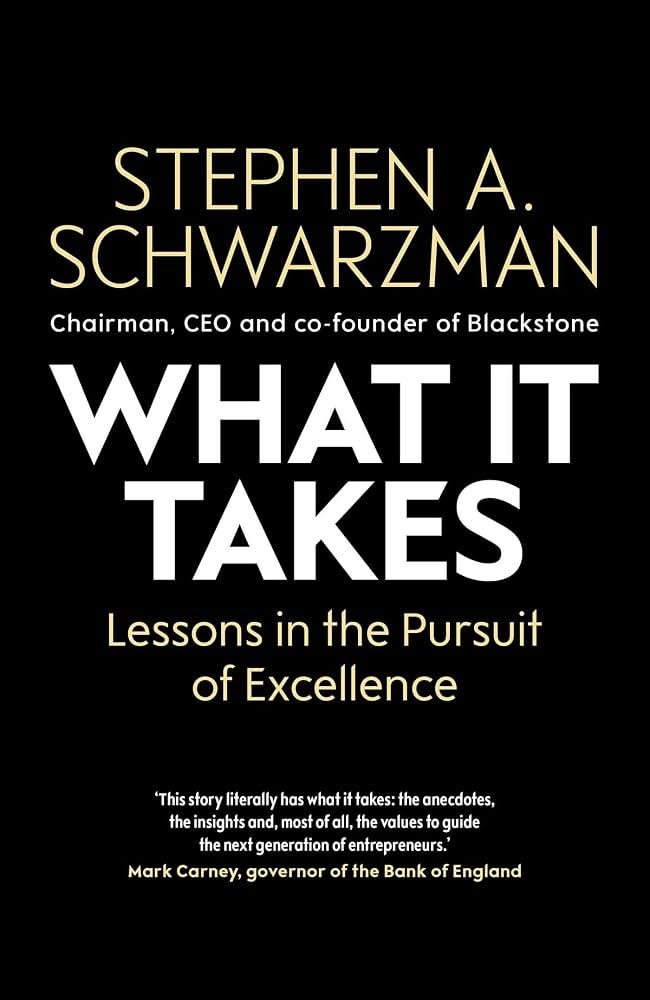
Over the past few weeks, I’ve been reading a book by the founder of Blackstone that has been on my bookshelf for a long time.
Last year, I was doing some work in that area generally, and it got me very interested in how the structure of private equity works versus something like venture capital investments, which I’m most familiar with. I really enjoyed a lot of the work. Still, I always found the business of private equity really interesting, and Blackstone is widely considered one of the best to ever do it. So, I bought this book intending to read it back then, but I finally got around to it now.
The premise of the book is basically an autobiography by the founder, covering everything from starting Blackstone to his early career and all the other things he did in life. What I really liked about it is its flow. You get to hear all the major stories, which include really interesting components of the 2008 financial crisis and how they built the business. But then, sprinkled throughout the book, is a series of principles and guidelines for how to work and live.
What I thought was very interesting about that is how, in our current business environment, there is so much movement toward taking shortcuts, making deals that may not always be the best deals, or playing people on deals. But the founder of Blackstone, which is the most successful private equity firm in the world, focuses most of what he talks about on integrity. He admits quite a lot when he is wrong and is able to carry those lessons forward into the functioning of his business. This approach built a reputation for them that has lasted generationally.
It reminds me a lot of the first firm I worked for in college, where the founder had a very similar mindset: reputation was always the foundation of their business. I think that is true for many financial firms.
Strategically, I also thought a lot of the things discussed were quite interesting, including how the financing and deals got done. He is incredibly honest about how every deal is basically a crisis, one where time and all of the details matter extremely highly. It was also fascinating to see how narrow of a margin some of these deals would close by, including the Blackstone IPO, which happened just days before the 2008 financial crisis kicked off.
I want to do more writing about the books I read because I think the insights can be good for other people, especially other entrepreneurs who are building things in areas like fintech. I’ve already recommended this one to a couple of friends who work in that space.